

Why Great Creative Still Fails Without the Right Media Strategy
Great creative gets attention
Media strategy determines whether anyone
worth reaching actually sees it.

We've all seen it happen.
A brand invests in stunning creative. The visuals are polished. The messaging feels right. The campaign launches with excitement—and then the results fall flat.
The first instinct is often to question the creative.
Was the message wrong?
Did the design miss the mark?
Should we have tried a different headline?
Sometimes that's true.
More often, though, the issue isn't the creative at all.
It's the strategy behind where, when, and how that creative was delivered.
great creative
doesn’t perform
equally Everywhere
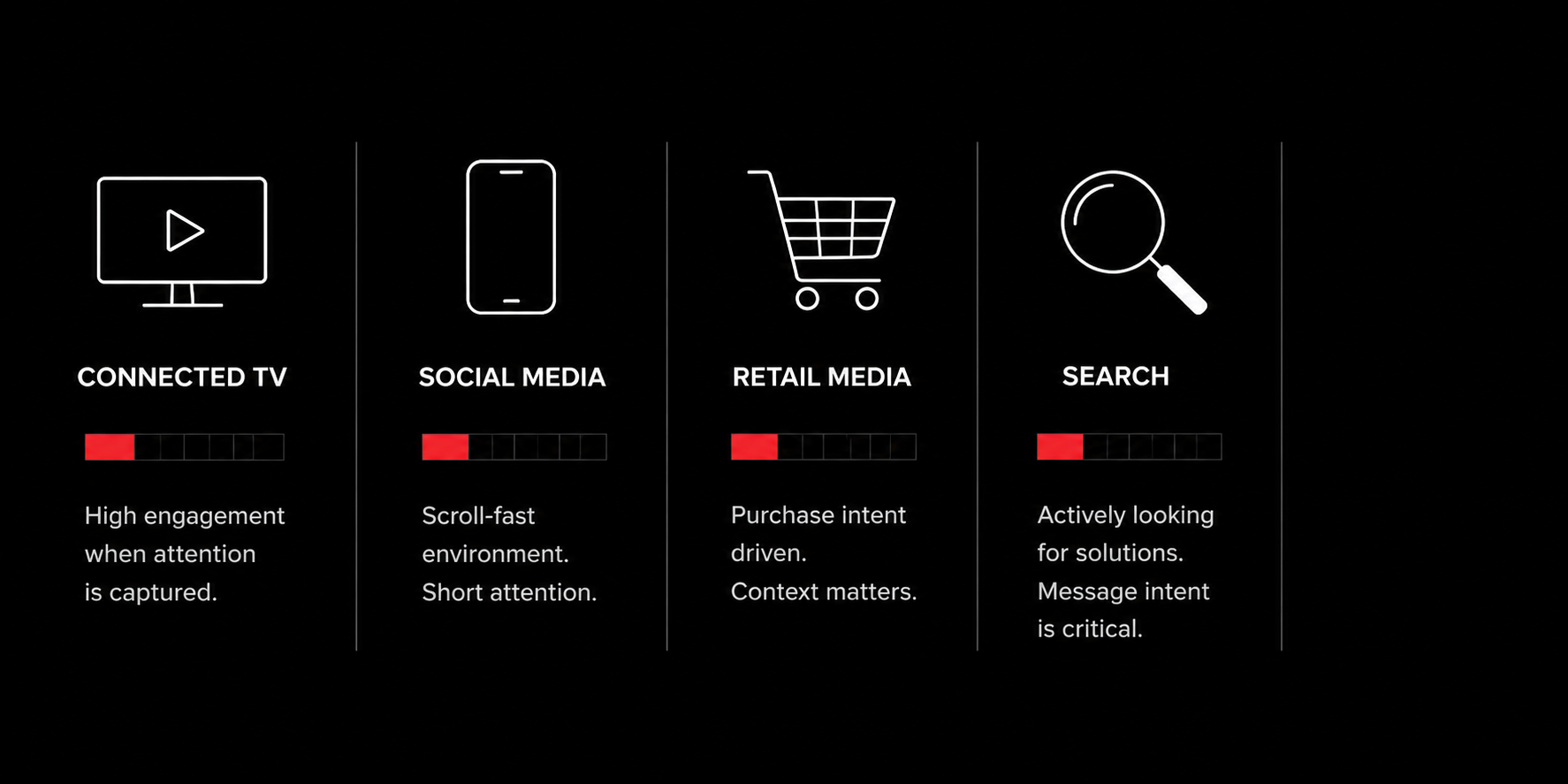
Every advertising platform has its own audience behaviors, formats, and expectations.
A video built for Connected TV isn't automatically effective on social media.
A static display ad won't necessarily perform in retail media.
Search campaigns require a completely different mindset than awareness campaigns.
The question isn't simply, "Is this good creative?"
It's, "Is this the right creative for this environment?"
context
shapes performance
Consumers don't engage with marketing in a vacuum.
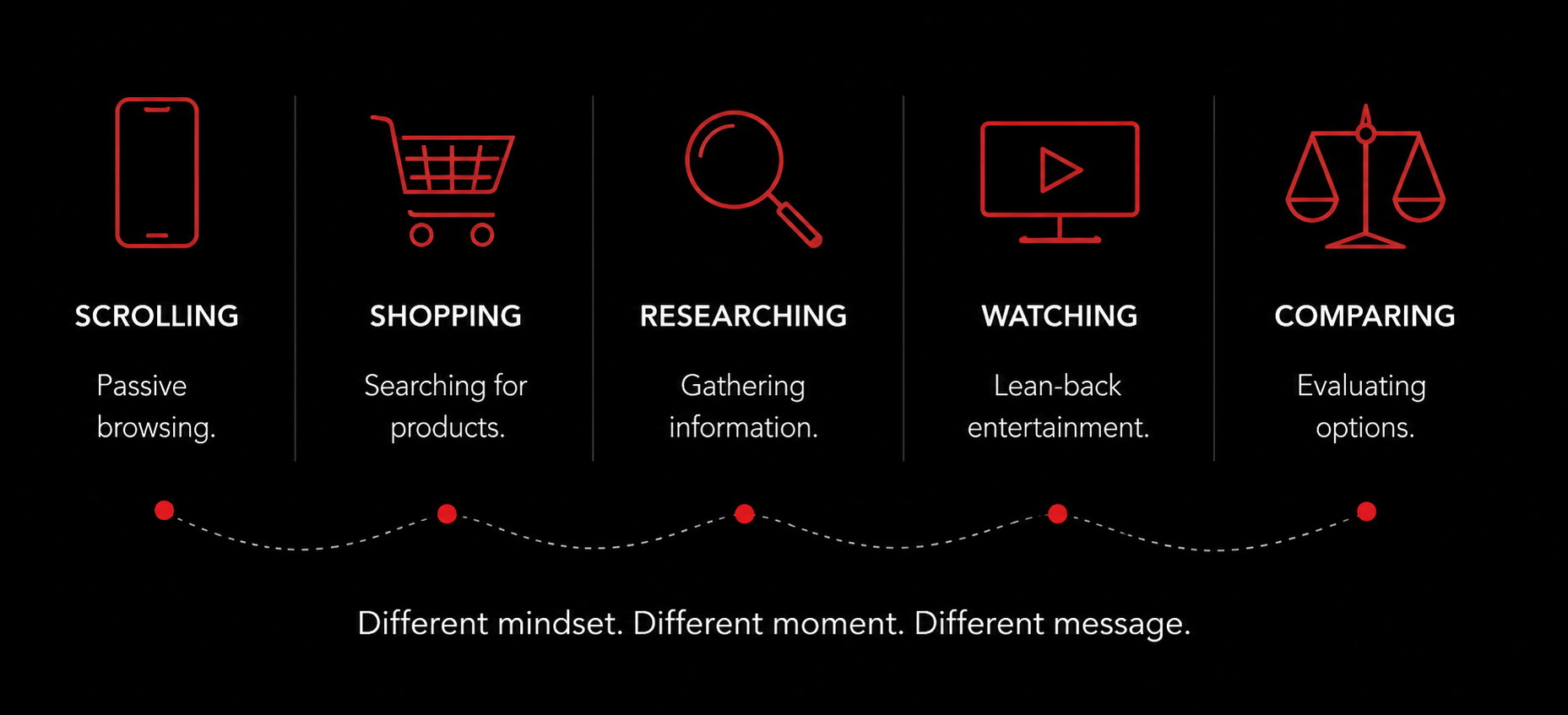
They're scrolling. Shopping. Researching. Watching. Comparing.
The same creative can perform dramatically differently depending on the mindset of the audience at that moment.
That's why media planning starts long before campaigns go live.
Understanding customer behavior is just as important as developing the creative itself.
Data should
inform every decision.
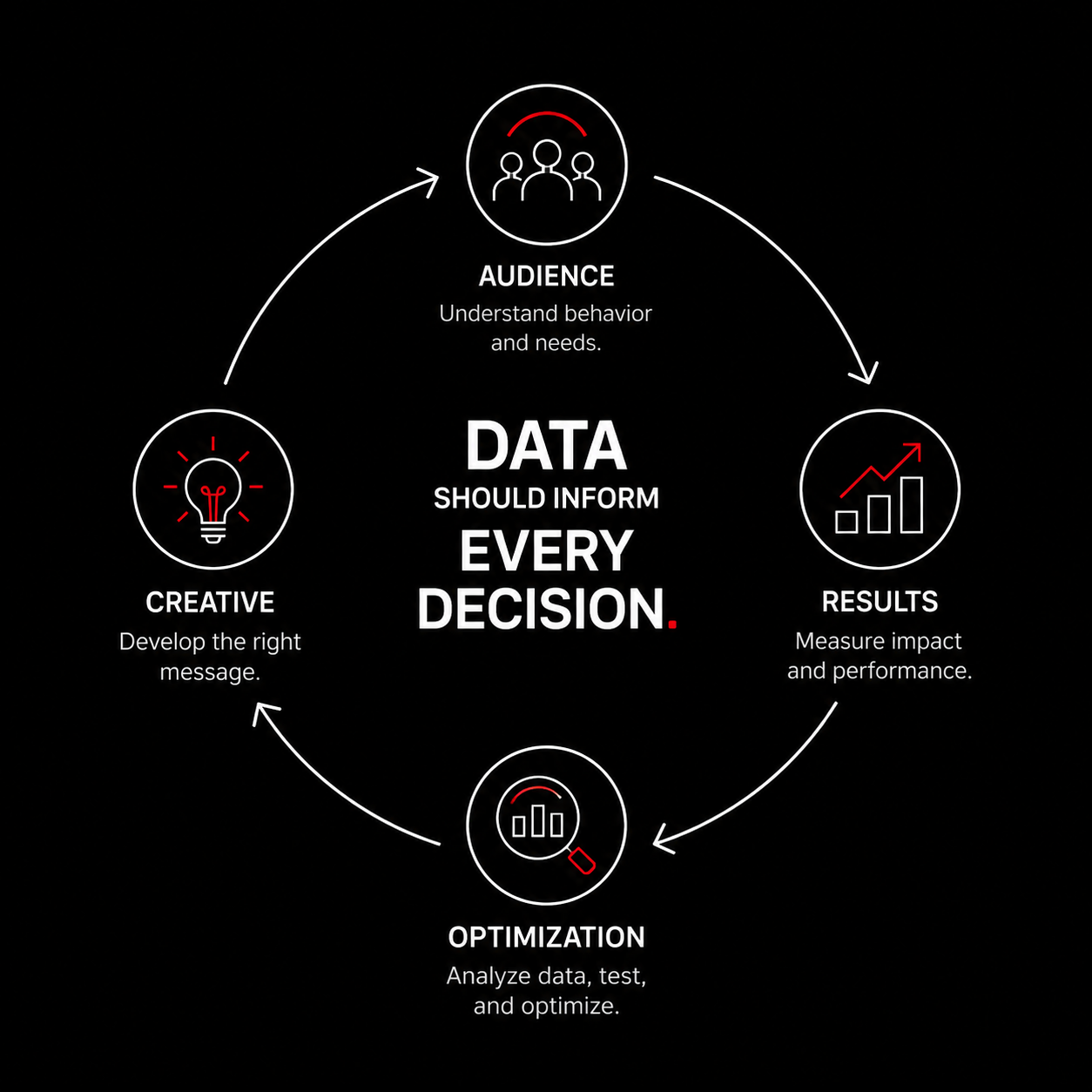
One of the greatest advantages of modern media is visibility.
We can see what's working.
We can identify where audiences engage.
We can adjust budgets, optimize placements, and improve performance in real time.
Creative isn't a one-time deliverable.
Media strategy turns campaigns into living systems that continuously improve.
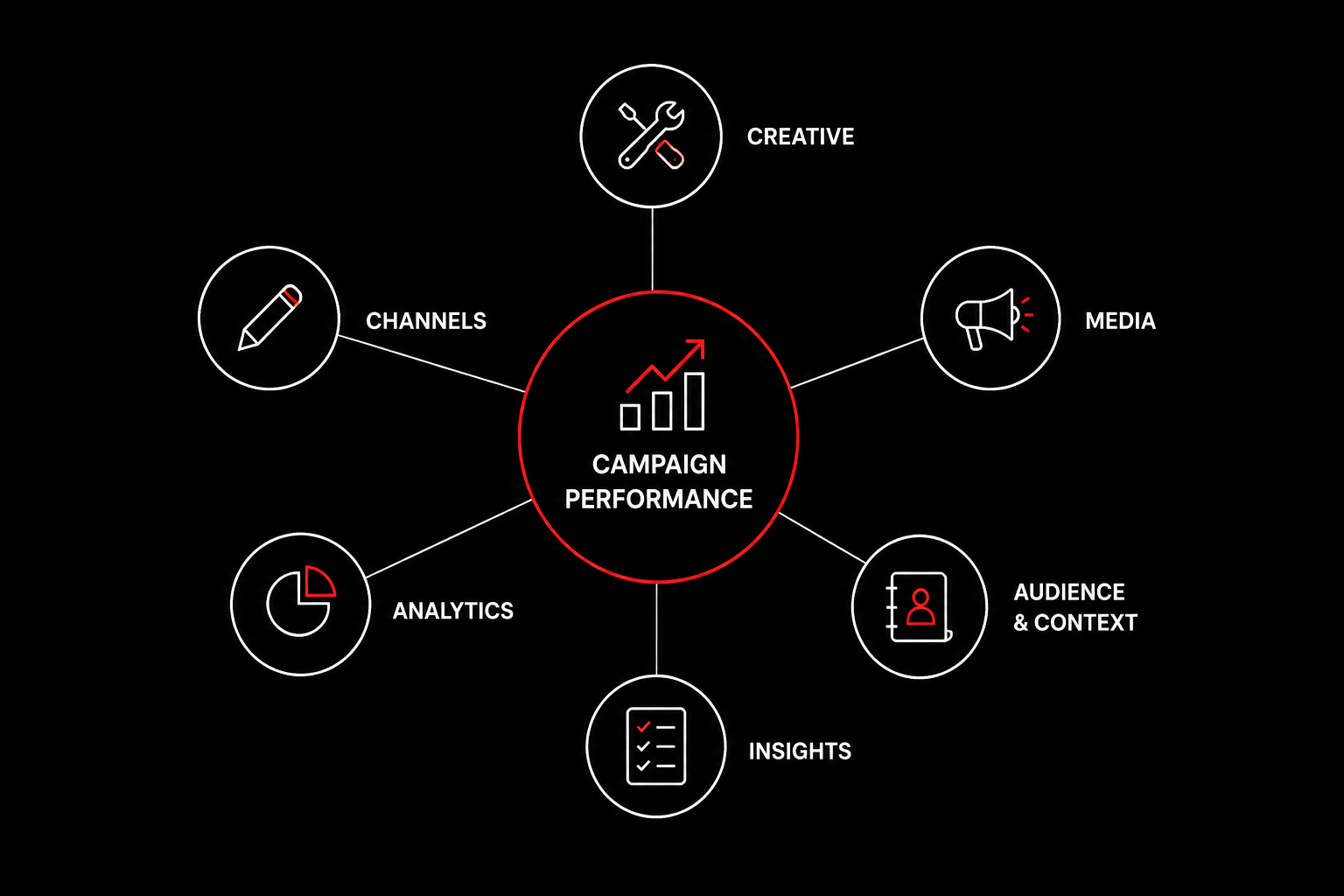
The best campaigns aren’t built in silos.
Creative teams shouldn't work independently from media teams.
Media planners shouldn't receive finished assets with no strategic input.
The strongest campaigns emerge when strategy, creative, media, analytics, and business objectives work together from the beginning.
When every discipline informs the others, campaigns become more efficient, more measurable, and ultimately more effective.
the bottom line
Great creative captures attention
Media strategy creates action.
Great creative deserves great strategy.
The goal isn't simply to create advertising people notice.
It's to create advertising that reaches the right audience, at the right time, in the right place—and drives meaningful business results.
Because creative may capture attention.
But media strategy determines whether that attention becomes action.
